Facebook Ads Mastery: The Ultimate Guide to Meta Advertising in 2025
This is the definitive guide to Facebook Ads Mastery — a complete walkthrough of campaign strategy, creative development, testing frameworks, technical setup, and scaling systems that have generated over $10 million in revenue. Whether you're launching your first campaign or optimizing a $50,000/month account, this guide has what you need.
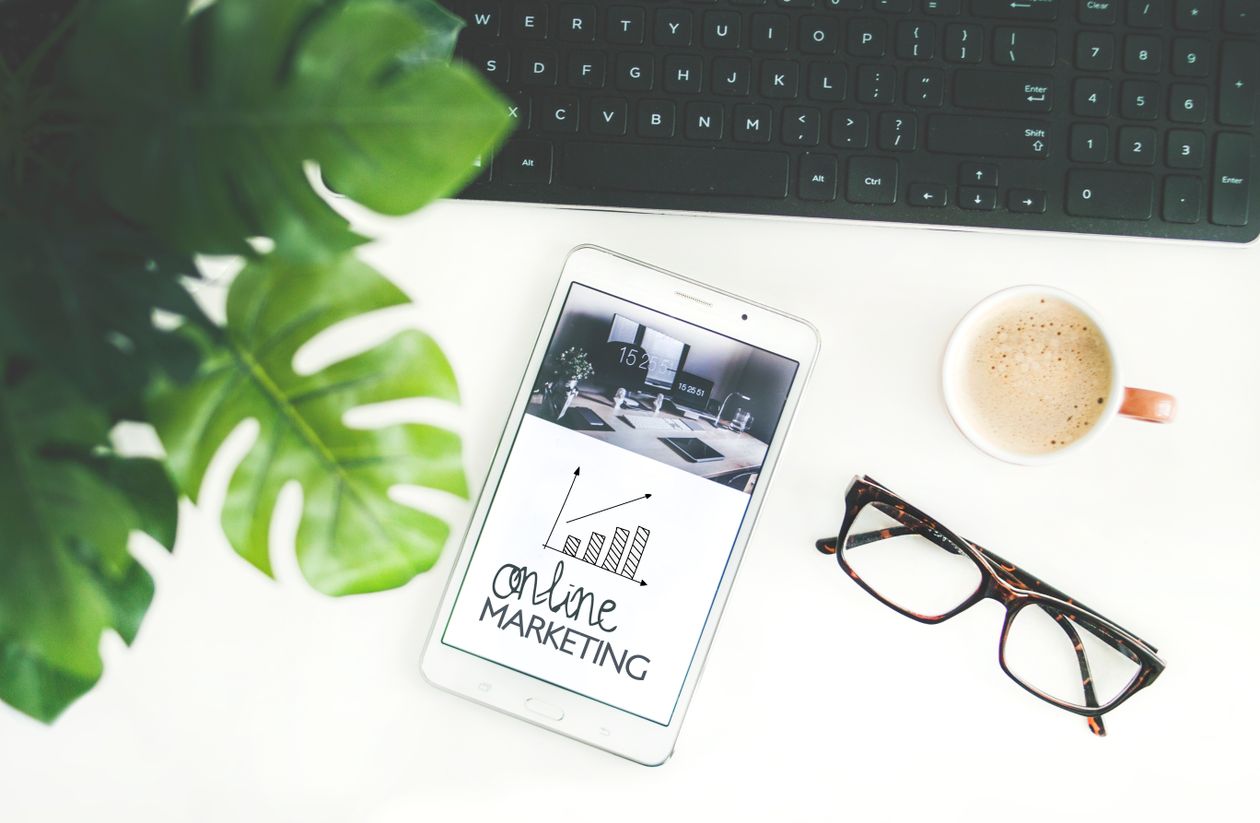
Mastering Facebook advertising requires understanding both the strategic and technical layers of Meta's ad platform. Source: Pexels
Why Facebook Advertising Remains the #1 Paid Channel in 2025
Despite an increasingly fragmented media landscape and the rise of TikTok advertising, Facebook and Instagram remain the most powerful direct-response advertising platforms available to most businesses. The reason is scale combined with intent signal density.
Meta's platforms collectively reach over 3.2 billion daily active users. The advertising system has access to over a decade of behavioral data — purchase intent signals, engagement patterns, content preferences, and demographic information — that no other platform can match in depth or accuracy. Even with iOS 14 restrictions limiting third-party data, Meta's first-party data from in-platform behavior is unrivaled.
For e-commerce, the case is particularly strong. Meta's shopping ecosystem — from catalog ads to dynamic product ads to Instagram Shopping — creates a near-frictionless path from ad discovery to purchase. Brands that master the platform's mechanics consistently achieve customer acquisition costs that outperform search, display, and even some influencer channels.
For lead generation, the platform's interest targeting and lookalike audience capabilities allow advertisers to reach highly specific professional and demographic audiences with precision. The introduction of Meta Advantage+ has made previously manual optimization tasks increasingly automated — but only for advertisers who understand the foundation.
Key insight: Facebook advertising effectiveness correlates more strongly with advertiser skill than platform quality. The same platform that delivers 0.9x ROAS for poorly structured campaigns regularly delivers 5x+ ROAS for well-structured ones. The platform didn't change — the approach did.
Facebook Ads Campaign Structure: The Right Foundation
Before a single dollar of ad spend, your campaign structure determines how well Meta can optimize, how cleanly you can read performance data, and how efficiently you can scale. Most underperforming accounts have structural problems at the root.
The Three Campaign Tiers
A well-structured Facebook ads account operates across three campaign tiers that correspond to funnel stage and audience temperature:
- Cold Prospecting Campaigns: Targeting new audiences who have no prior interaction with your brand. Use Advantage+ targeting, broad demographics, or 1–3% lookalike audiences built from customer lists or purchase events. These campaigns are typically your highest volume but lowest conversion rate. Budget allocation: 50–60% of total spend.
- Warm Retargeting Campaigns: Targeting users who have engaged with your content, visited your website, or interacted with your brand within the last 30–90 days. These audiences are significantly more likely to convert and should receive different creative — social proof, urgency messaging, or offer-focused ads. Budget allocation: 25–35% of total spend.
- Hot Conversion Campaigns: Cart abandoners, checkout initiators, and recent engaged visitors. These are your highest-intent audiences and deserve your most aggressive offer messaging. Budget allocation: 10–15% of total spend.
This three-tier structure ensures that budget is allocated in proportion to audience intent — without spending 80% of your budget trying to re-convince cart abandoners who represent 2% of your total traffic.
CBO vs. ABO: When to Use Each
Campaign Budget Optimization (CBO) lets Meta's algorithm distribute budget across ad sets based on predicted performance. Ad Set Budget Optimization (ABO) gives you manual control at the ad set level. Both are tools with appropriate contexts.
Use ABO during the testing phase when you need equal budget distribution across multiple creative variations to gather comparable performance data. Without ABO, CBO will overwhelm budget to the perceived early winner before you have meaningful data on other variations.
Use CBO for scaling campaigns once you've identified winning creative-audience combinations. CBO's dynamic budget allocation is a genuine advantage when optimizing an already-proven campaign — Meta can shift spend toward the highest-performing ad set in real time.
Get the Complete Campaign Structure Templates
The $10M Playbook includes exact campaign structures, naming conventions, and budget allocation frameworks for every business type and budget level.
Download the Playbook →Creative Mastery: Making Ads That Actually Work
In 2025, creative is the most important performance lever in Facebook advertising. Meta's shift toward broader audience targeting and algorithmic delivery means the creative itself does the audience targeting — the algorithm identifies who responds to it and delivers accordingly. A breakthrough creative can outperform precision targeting by orders of magnitude.
The Anatomy of a Winning Facebook Ad
High-performing Facebook ads share structural characteristics regardless of industry, product price, or audience type:
- Hook (0–3 seconds): The opening moment of a video or the visual of a static ad. It must stop the scroll. Winning hooks either address a specific pain point directly, present a surprising or counterintuitive claim, or create curiosity that demands resolution. The hook is your single highest-leverage creative element.
- Value proposition (3–15 seconds): What you offer and why it matters. Benefit-focused, not feature-focused. "Lose 12 lbs in 30 days" outperforms "Contains 24g of protein per serving" in almost every test.
- Social proof (15–30 seconds): Testimonials, reviews, transformation stories, or credibility signals. Social proof is the trust accelerant that allows strangers to take purchasing action. For cold audiences, it is often the decisive factor.
- Call to action: Specific, direct, and benefit-oriented. "Shop now" underperforms "Claim your 30% discount." Tell the viewer exactly what to do and why to do it immediately.
UGC vs. Polished Production
User-generated content style video — filmed on a smartphone, conversational, and authenticity-forward — consistently outperforms high-production studio video in direct response campaigns. The mechanism is trust: UGC triggers the mental heuristic that real people are sharing real experiences, which lowers purchase resistance dramatically.
This does not mean low quality. The best performing UGC-style ads are carefully scripted and deliberately structured — they merely present as organic and authentic. Invest in scripting and casting; save on production equipment.
There are contexts where polished production wins: luxury positioning, brand-building campaigns, high-ticket products where production quality signals credibility. Understand your brand positioning and test both approaches.
Static Ad Strategy
Static image ads are frequently underutilized by advertisers who chase video performance benchmarks. A well-constructed static ad — high contrast image, benefit-forward headline overlay, clear product visibility — regularly achieves CPMs 30–50% below video ads and converts well for retargeting and bottom-of-funnel campaigns.
The key to static ad performance is visual clarity. Remove everything from the image except the product or transformation, the core benefit statement, and a single CTA. Complexity is the enemy of static ad performance.

Systematic creative development — scripting, testing hooks, iterating on concepts — is the highest-leverage activity in modern Facebook advertising. Source: Pexels
The Complete Facebook Ads Testing System
A disciplined testing system is what separates advertisers who consistently find winners from those who rely on luck. The $10M Playbook's testing framework is built on one core principle: spend the minimum amount necessary to identify which creative concept deserves investment, then scale that concept with conviction.
What to Test (And in What Order)
Test in priority order based on expected performance impact:
- Creative concept: The fundamental idea — problem-solution, transformation, testimonial, comparison. This has the highest performance variance. Test 3–5 concepts.
- Hook: The opening 3 seconds. Even within a winning concept, hook variation can shift CTR by 2–3x. Test 3+ hooks on your best concept.
- Offer: Price, discount structure, bonus, or guarantee framing. Offer changes often have large effects on conversion rate and CPP.
- Audience: Only after proving creative and offer should you systematically test audiences. Leading with audience testing wastes creative development resources.
Testing Metrics and What They Mean
During the testing phase, use these metrics as decision signals:
- Hook rate (3-second video views / impressions): Above 30% is strong. Below 15% means the creative opening needs reworking regardless of other metrics.
- CTR (link click-through rate): Above 1.5% for cold audiences indicates strong creative resonance. Below 0.8% on sufficient impressions is a signal to pause.
- CPM (cost per 1,000 impressions): Lower CPM for equivalent creative quality means Meta predicts the ad will generate good engagement — a quality signal from the algorithm itself.
- Cost per purchase / cost per lead: The ultimate performance metric. But require sufficient data (minimum 15–20 events) before drawing conclusions.
Meta Pixel and Conversions API: Complete Technical Setup
Technical tracking infrastructure is the unsexy foundation of profitable Facebook advertising. Without accurate event data, Meta's algorithm cannot optimize effectively, your reporting is misleading, and scaling decisions are made on false signals.
Understanding iOS 14's Impact
Apple's App Tracking Transparency framework, introduced with iOS 14.5 in April 2021, required apps to obtain explicit user consent before tracking. The majority of iOS users declined tracking — removing a significant portion of Meta's behavioral data on iOS users.
The practical consequences for Facebook advertisers: underreported conversions (typically 20–40% of real purchases), degraded lookalike audience quality, suboptimal campaign optimization, and unreliable attribution data. Advertisers who haven't adapted their measurement strategy are operating with fundamentally broken data.
Conversions API: The Solution
The Meta Conversions API transmits conversion events from your server directly to Meta — bypassing browser restrictions, iOS privacy settings, and ad blockers entirely. Server-side events are not affected by cookie deprecation or consent frameworks because they originate from your infrastructure, not the user's browser.
The recommended architecture is browser Pixel + server-side CAPI running simultaneously, using the deduplication event_id parameter to prevent double-counting. This redundant tracking setup ensures maximum event capture regardless of the user's browser environment.
Shopify merchants can enable CAPI directly through the Meta sales channel in their Shopify admin — no custom code required. WooCommerce, Magento, and custom platforms require manual API implementation or a third-party integration layer.
Facebook Ads Audience Strategy for 2025
The targeting landscape on Meta has shifted significantly toward algorithmic audience discovery (Advantage+) and away from manual interest-based stacking. Understanding when to use each approach and how to structure your audiences is critical for cost-efficient reach.
Advantage+ Audiences
Advantage+ audience targeting removes manual targeting parameters and lets Meta's algorithm find the people most likely to convert based on your Pixel data and optimization objective. For accounts with strong purchase signal (50+ purchases per week), Advantage+ typically outperforms manual targeting by 15–35% on cost-per-purchase.
The prerequisite is sufficient Pixel data. Advantage+ needs learning signal to optimize effectively. New accounts and low-volume products benefit from more manual guardrails during the initial data accumulation phase.
Lookalike Audiences
Lookalike audiences — built from your customer list, purchase events, or high-value behavioral triggers — remain among the most reliable cold audience targeting options. Key principles: build from your best customers (top 25% by LTV or all purchasers), use 1% lookalikes for precision prospecting and 2–5% for volume at scale, and refresh lookalike seed audiences at least quarterly with updated data.
Interest Targeting
Interest-based targeting has become less precise as Meta's data richness in third-party behavioral categories has declined. That said, interest stacking — combining multiple relevant interests with demographic refinements — can still generate profitable cold audiences, particularly for niche products with clearly definable interest categories. Test interest stacks against broad targeting and lookalikes to determine what works for your specific audience.
Facebook Ads for Shopify: Complete Integration Guide
Shopify stores have structural advantages in Meta advertising that non-Shopify businesses don't automatically have: native catalog integration, simplified Pixel setup, one-click CAPI activation, and dynamic product ads. Leveraging these properly is one of the highest-ROI technical investments a Shopify merchant can make.
Catalog Setup and Health
A properly configured Meta product catalog is the prerequisite for Dynamic Product Ads, Advantage+ Shopping, and collection ads. Ensure your catalog is synced in real time, all product images meet Meta's specs (1:1 ratio, minimum 500x500px, no excessive text overlay), and product descriptions are complete and accurate.
Catalog health — the percentage of products approved and actively deliverable — directly affects campaign reach and performance. Products disapproved for policy violations are silently excluded from delivery. Audit your catalog health monthly and resolve violations promptly.
Advantage+ Shopping Campaigns for Shopify
Advantage+ Shopping Campaigns (ASC) are Meta's most automated campaign type — fully algorithmic audience selection, placement optimization, and creative delivery. For Shopify stores generating 50+ weekly purchases, ASC is often the single highest-performing campaign type with the lowest management overhead.
Structure your ASC with your best 3–5 creatives, connect your product catalog, set your budget at 30–40% of your total prospecting budget, and monitor weekly. The algorithm handles the rest.
The Complete Shopify Facebook Ads System
Get the full Shopify catalog setup guide, DPA configuration templates, and ASC optimization framework inside the $10M Playbook.
Download Now →Facebook Retargeting: Recovering Lost Revenue
Research consistently shows that 92–97% of website visitors don't convert on their first visit. A properly structured retargeting funnel recovers a meaningful percentage of these high-intent prospects at a fraction of the cost of acquiring new cold traffic.
Retargeting Audience Windows
Structure your retargeting audiences by recency and intent depth:
- 1–3 day window: Your hottest intent. Recent visitors who browsed your site in the past 72 hours. Show them the product they viewed with direct purchase messaging and urgency signals.
- 7–14 day window: Still warm. Use social proof, reviews, and testimonials to address purchase objections. Introduce comparison framing to position against alternatives they may be evaluating.
- 30 day window: Cooling intent. Offer a value-add: discount, free shipping, or bonus inclusion. Re-engage with new creative angles that address common hesitations.
- 90 day window: Re-engagement audience. These are brand-aware but non-converters who need a reason to return. New product launches, seasonal promotions, or significant offer changes can reactivate this audience profitably.
Scaling Facebook Ads Profitably: The Complete Framework
The most common mistake in Facebook ad scaling is moving too fast before a campaign has proven stability. Rapid budget increases — particularly jumps of 50% or more — can reset the learning phase, destabilize performance, and turn a profitable campaign into a losing one within days.
The 20/72 Rule
The safest scaling pace for most accounts is 20–30% budget increases every 72 hours. This rate allows Meta's algorithm to adapt to increased delivery volumes without triggering full learning phase resets. For campaigns already out of the learning phase with consistent performance, this pace can maintain performance through 5–10x budget increases before reaching audience saturation.
Horizontal Scaling: Reaching More People
Horizontal scaling — duplicating winning ad sets to new audiences — expands total reach without concentrating risk on a single audience. When a winning creative-audience combination reaches 2.5+ frequency or shows rising CPMs (indicating audience saturation), duplicating to a new lookalike percentage, geographic expansion, or interest-based audience can restore performance momentum.
When to Stop Scaling
Scaling should slow or pause when: 7-day ROAS drops below your profitability threshold, frequency exceeds 4–5 in a 7-day window, CPP increases by more than 25% from baseline over 5+ days, or creative fatigue metrics (declining CTR, rising CPM) become persistent. These signals indicate the campaign needs fresh creative before additional budget increase — not more budget pushing against diminishing audience quality.
Key Facebook Ads Metrics and What They Tell You
Most Facebook advertisers track too many metrics without understanding what each one is actually measuring. Focus on the metrics that answer specific operational questions:
- ROAS (Return on Ad Spend): Revenue ÷ Ad spend. Your primary profitability signal. Compare to your break-even ROAS weekly, not daily — daily fluctuations are noise.
- CPP (Cost Per Purchase): Total spend ÷ number of purchases. Simpler and often more stable than ROAS as a day-to-day optimization signal.
- CTR (Click-Through Rate): Link clicks ÷ impressions. Creative quality signal. Compare across ad variations, not against industry benchmarks.
- CPM (Cost Per 1,000 Impressions): Algorithm quality score signal. Lower CPM for equivalent creative quality means better predicted engagement.
- Frequency: Average number of times each unique user has seen your ad. Above 3 in a 7-day window typically indicates the need for creative refresh or audience expansion.
- Landing page conversion rate: Purchases ÷ landing page views. If this drops while CTR remains stable, the landing page is the bottleneck — not the ad.
Frequently Asked Questions
How do I start Facebook ads with a small budget?
Start with $30–$50/day split across 2–3 ad variations in one campaign. Focus all budget on your single best creative concept and your highest-intent audience — either a customer lookalike or your most specific interest stack. The goal with a small budget is to identify one profitable creative-audience combination before expanding. The $10M Playbook includes a specific small-budget launch protocol for under $1,500/month.
What is the Facebook Ads learning phase?
The learning phase is Meta's period of algorithm calibration after a new ad set launches or significant changes are made. During this phase — typically requiring 50 optimization events — performance is less stable and cost-per-result may be elevated. Avoid making changes during learning. Let it complete before evaluating performance. Budget changes greater than 20–30% or editing ad content will reset the learning phase.
How do I know if my Facebook ad creative is underperforming?
Signals of underperforming creative: CTR below 0.8% on 3,000+ impressions, hook rate below 20% on video ads, CPM significantly above account average, no purchases after spending 2–3x your target CPP. Any one of these in isolation may be noise; two or more signals together warrant pausing the creative and testing a new variation.
Should I use automatic placements on Facebook?
For most campaigns, yes. Advantage+ placements (formerly automatic placements) allow Meta to distribute your ads across Facebook, Instagram, Messenger, Audience Network, and Reels — optimizing delivery to wherever your audience converts most cost-effectively. Manual placement restriction to, say, Facebook Feed only typically increases CPM without proportionally improving conversion rate. Test manual vs. automatic placements if you suspect a specific placement is hurting performance.
How is the $10M Playbook different from free Facebook ads guides?
Free guides typically cover basics — campaign creation, boost posts, basic targeting. The $10M Playbook is derived from $10 million in real ad spend across multiple verticals and goes far deeper: campaign architecture decisions, creative testing infrastructure, CAPI technical implementation, Shopify-specific strategy, scaling mechanics at high spend levels, and case studies with real numbers. It's a practitioner's handbook, not a beginner's overview.
Ready to Master Facebook Advertising?
Download the complete Facebook Ads Mastery: The $10M Playbook — the most comprehensive action guide available for Meta advertising. Instant access, all skill levels.
Get the $10M Playbook — Download Now →Continue Learning
- Facebook Ads for Shopify: Complete Store Owner's Guide
- Facebook Ads Testing Framework: Find Winners Fast
- Facebook Ads Creative Strategy: Hooks, UGC, and Scaling
- How to Scale Facebook Ads Without Killing Performance
- Facebook Retargeting Guide: Recover Lost Revenue
- Meta Ads Guide: Complete Platform Overview
- Facebook Ads Metrics Explained
- Back to Homepage